Veteran Home Care in Georgia: How VA Benefits Help You Stay at Home
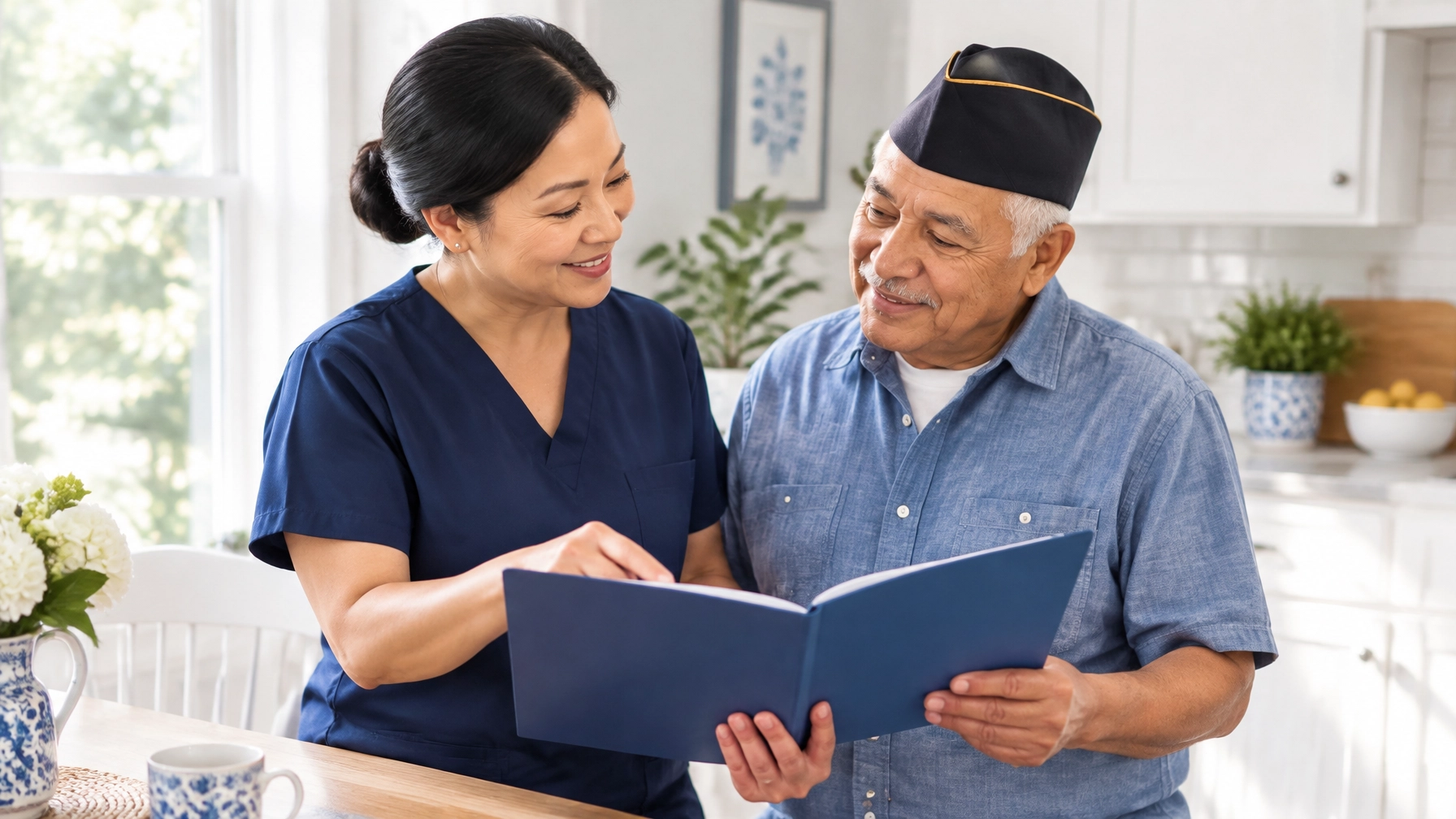
For many Georgia veterans, staying at home is an important part of maintaining independence, comfort, and dignity. When daily tasks become more difficult, in-home support can help you remain connected to your routines and community while giving your family greater peace of mind.
VA benefits may help eligible veterans access care at home or receive financial support that can be used toward in-home assistance. However, each benefit has its own eligibility requirements, approval process, and service limitations.
This guide explains how VA Community Care, VA Aid and Attendance, and related services may support veteran home care in Georgia.
> Important: VA benefits, eligibility requirements, covered services, and payment rules can change. The VA makes all final eligibility and authorization decisions. Always confirm current information directly with the VA or an accredited Veterans Service Officer.
How VA Benefits Can Support Care at Home
Veterans may have more than one possible pathway to in-home support. The right option depends on your health needs, VA enrollment, military service history, financial circumstances, and the services available in your area.
Common pathways include:
VA health care services delivered at home.
VA-authorized care through VA Community Care.
VA pension benefits with an Aid and Attendance increase.
Support for certain eligible family caregivers.
Other federal, state, or private benefits that may help with care costs.
Some veterans receive services directly through the VA. Others may receive authorization for care from a community-based provider. In some situations, a veteran may use a monthly VA pension benefit to help pay for private in-home assistance.
What Is VA Community Care?
VA Community Care allows eligible veterans to receive certain health care services from approved community providers when the VA authorizes that care.
A veteran may receive community care when the VA determines that the service is medically necessary and one or more access requirements apply. For example, the appropriate service may not be available at a VA facility, the veteran may live too far from a VA location, or the veteran may need care that is available through the community.
VA Community Care is not the same as choosing any home care agency and expecting the VA to pay automatically. Typically, the veteran must:
Be enrolled in VA health care or otherwise meet applicable requirements.
Discuss the need for care with the VA health care team.
Receive an assessment or referral.
Obtain VA authorization before services begin.
Use a provider and service arrangement approved by the VA.
The VA may authorize services such as homemaker or home health aide care, skilled home health care, therapy, or other forms of community-based support when clinical criteria are met and the service is available.
If you are considering veteran in-home care in Georgia, begin by speaking with your VA primary care team, social worker, or care coordinator. You can also review the VA’s long-term care and home health information.

What Is VA Homemaker and Home Health Aide Care?
The VA’s Homemaker and Home Health Aide program may help eligible veterans with everyday personal care and household activities.
A trained aide may assist with needs such as:
Bathing and personal hygiene.
Dressing and grooming.
Eating and meal preparation.
Toileting assistance.
Moving safely from one place to another.
Grocery shopping and basic errands.
Light housekeeping related to health and safety.
These services are generally intended for veterans who need help with activities of daily living, who are isolated, or whose family caregivers need additional support.
According to the VA’s Homemaker and Home Health Aide guidance, enrolled veterans may qualify when they are eligible for community care, meet the clinical criteria for the service, and the service is available in their location. Services may vary by area, and a copay may apply in some situations.
The VA determines the number of hours and types of assistance based on an assessment of your needs. A service may be provided several times each week or less frequently, depending on the care plan.
How VA Aid and Attendance May Help
Aid and Attendance is an additional monthly payment added to certain VA pension benefits. It is different from VA Community Care.
Aid and Attendance may help veterans who need regular assistance with daily activities, such as bathing, feeding, or dressing. It may also apply in certain circumstances involving extended bed rest, nursing home care, or severe vision limitations.
Generally, a veteran must already qualify for a needs-based VA pension and meet applicable service, income, net worth, and medical requirements. Surviving spouses may also qualify in some situations.
Because Aid and Attendance is a pension increase rather than a direct home care authorization, the funds may provide greater flexibility for paying for eligible personal care support. However, the VA, not a home care agency, determines whether you qualify and how much you may receive.
Learn more through the official VA Aid and Attendance and Housebound benefits page. An accredited Veterans Service Officer may also help you understand the application process and required documentation.
Medical and Non-Medical Home Care Are Different
Understanding the difference between medical and non-medical care can make your conversation with the VA and your family more productive.
Medical Home Health Care
Medical home health care is provided by licensed or clinically trained professionals. Depending on the care plan, services may include:
Skilled nursing.
Wound care.
Medication management.
Physical, occupational, or speech therapy.
Health assessments.
Recovery support after illness, injury, or surgery.
Medical services usually require a clinical evaluation, physician involvement, or an applicable order or authorization.
You can learn more about the nursing support offered by Caring Hearts through our nursing services page.
Non-Medical In-Home Care
Non-medical care focuses on daily support, safety, routine, and quality of life. Services may include:
Personal hygiene assistance.
Mobility and transfer support.
Meal planning and preparation.
Companionship.
Light housekeeping.
Grocery shopping and errands.
Appointment escorting.
Medication reminders.
Caring Hearts of Georgia provides personal care services and companion and sitter services designed around each client’s needs and preferences.
Medical and non-medical services may sometimes work together, but they are not interchangeable. A veteran may need skilled nursing for one need and non-medical assistance for another. The VA or other payer determines which services are covered.
Questions About Eligibility
Every veteran’s circumstances are different. The VA may consider factors such as:
Enrollment in VA health care.
Clinical need for a specific service.
Service-connected disability status.
Distance from an available VA facility.
Local service availability.
Military service history.
Income and net worth, particularly for pension-based benefits.
Existing insurance or other sources of care.
The needs and availability of a family caregiver.
Meeting one requirement does not guarantee approval for every program. A veteran may qualify for one benefit but not another, or may qualify for a service with a limited number of authorized hours.
The most reliable way to understand your options is to request a current review through the VA.
How to Begin the Process
If you or a loved one may need veteran home care in Georgia, these steps can help you begin:
1. Contact the VA
Speak with your VA primary care team, social worker, or care coordinator. Explain what has changed at home and identify the daily activities that have become difficult or unsafe.
2. Ask About Specific Programs
Ask whether you may be appropriate for:
Homemaker and Home Health Aide Care.
Skilled Home Health Care.
Home-based primary care.
Respite care.
Veteran-Directed Care, where available.
VA Community Care.
Aid and Attendance or Housebound benefits.
Caregiver support programs.
3. Gather Relevant Information
It may help to keep a list of:
Daily tasks that require assistance.
Recent falls, hospital stays, or changes in mobility.
Medical conditions and medications.
Current family caregiving responsibilities.
Military service and VA benefit information.
The type and frequency of support needed.
4. Confirm Authorization and Payment
Before arranging services, ask who will pay, whether authorization is required, whether a copay applies, and which providers may be used.
5. Speak With a Local Home Care Provider
A qualified agency can discuss available services, caregiver matching, scheduling, documentation, and next steps. Caring Hearts of Georgia Health Services welcomes the opportunity to speak with veterans and families about personalized care needs.
Support That Respects Your Independence
The goal of in-home care is not to take away your independence. It is to provide the right level of support so you can remain safer, more comfortable, and more confident at home.
Caring Hearts of Georgia Health Services provides compassionate in-home care for eligible veterans and families across Georgia. Our team can help you understand available non-medical services and discuss how care may fit your routine.
If you are ready to begin a conversation, contact Caring Hearts of Georgia. We will listen to your needs and help you identify a practical next step. For current benefit determinations, always contact the VA directly.