
Companion Care vs Personal Care: What's the Difference (and Which Does Your Loved One Need)?

When your loved one begins needing help at home, it is natural to have questions. Does your family member need someone for conversation, errands, meals, and supervision? Or do they need hands-on assistance with bathing, dressing, toileting, or mobility?
Understanding the difference between companion care and personal care can help you choose support that matches your loved one’s daily needs. Many families discover that the right plan includes a combination of both.
At Caring Hearts of Georgia Health Services, we provide compassionate, personalized in home care services in Georgia for older adults, individuals with disabilities, veterans, and families who want dependable support at home.
What Is Companion Care?
Companion care focuses on social connection, supervision, household support, and everyday assistance. It is often appropriate when a person can manage personal hygiene and basic mobility independently but should not spend long periods alone.
A companion caregiver can provide meaningful interaction while helping your loved one remain engaged in familiar routines.

Companion care may include:
Conversation and friendly visits.
Playing games or participating in arts and crafts.
Reading books or enjoying music together.
Taking walks or accompanying your loved one to activities.
Supervision and safety checks.
Light housekeeping.
Laundry and changing linens.
Washing dishes and taking out the trash.
Grocery shopping and other errands.
Meal planning and preparation.
Meal setup and cleanup.
Escorting your loved one to appointments, therapy sessions, or social gatherings.
Medication reminders, when included in the care plan and permitted by applicable requirements.
Companion care can be especially helpful for someone who feels isolated after giving up driving, lives alone, or has difficulty keeping up with household responsibilities.
The goal is not simply to “sit” with your loved one. Quality companion care encourages connection, confidence, safety, and participation in everyday life.
Learn more about Caring Hearts of Georgia’s companion and sitter services.
What Is Personal Care?
Personal care provides hands-on assistance with activities of daily living. These are personal tasks that help a person maintain hygiene, comfort, safety, and dignity.
Personal care may be needed when your loved one has physical limitations, balance concerns, weakness, cognitive changes, or another condition that makes daily self-care difficult or unsafe.
Personal care assistance may include:
Bathing and showering assistance.
Dressing and changing clothes.
Grooming and hair care.
Oral care.
Toileting assistance.
Assistance with eating, when appropriate and included in the care plan.
Mobility assistance.
Help getting in and out of bed.
Transfers between a bed, chair, or other safe surface.
Support with assistive devices.
Fall prevention and safe movement around the home.
Meal preparation and household support.
Medication reminders, rather than medication administration, when permitted and included in the care plan.
Personal care should always be provided respectfully. Your loved one should remain involved in decisions about their routine, preferences, clothing, meals, and schedule.
At Caring Hearts of Georgia, our caregivers focus on providing safe, individualized support while protecting each client’s privacy and independence.
Explore our personal care services.
The Main Difference: Hands-On Support
The simplest way to understand the difference is to ask whether your loved one needs routine physical help with personal tasks.
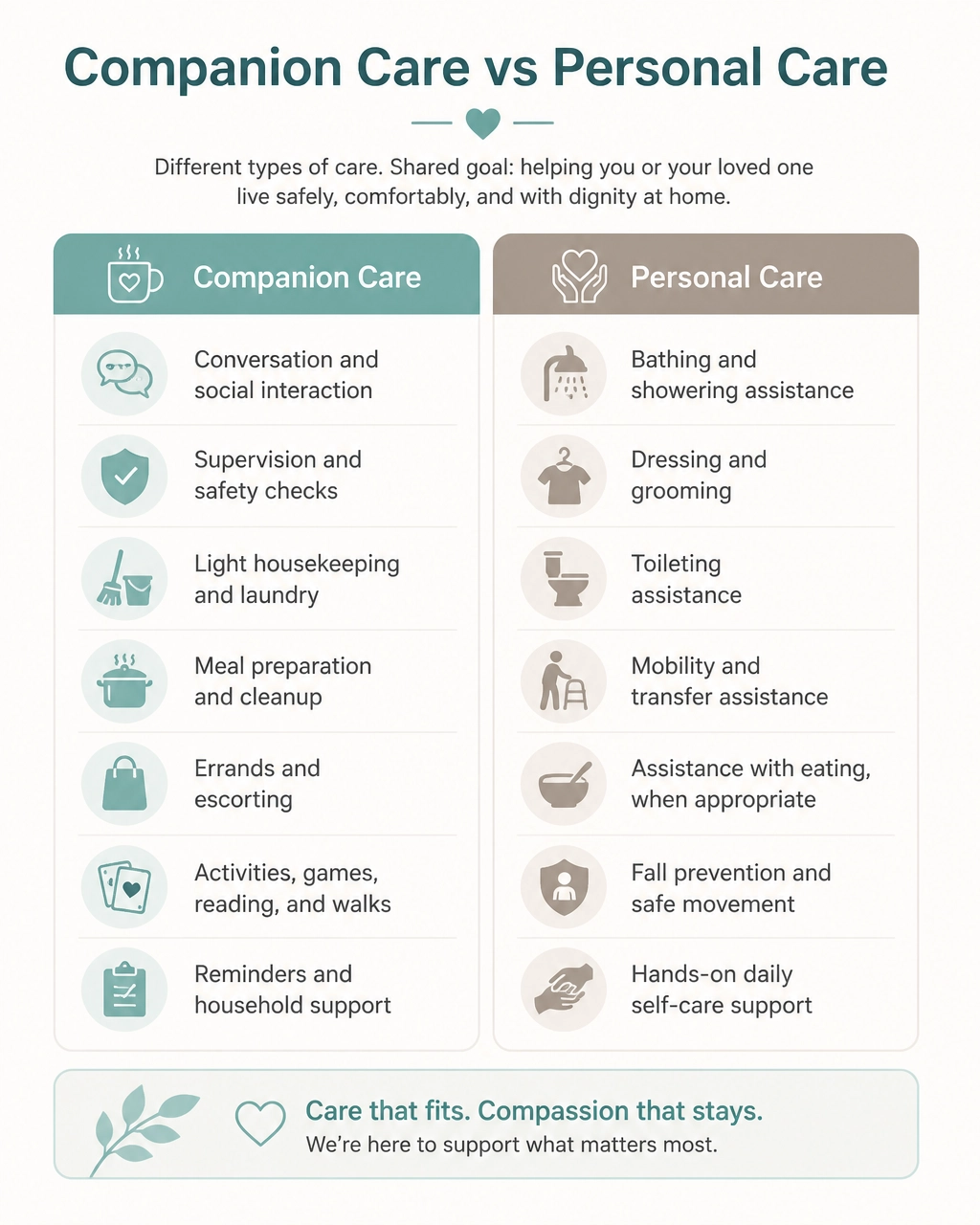
In Georgia, companion or sitter services and personal care tasks are distinct categories of private home care services. The Georgia Department of Community Health explains that private home care services may include nursing services, personal care tasks, and companion or sitter tasks.
Because service definitions and care responsibilities matter, families should ask a provider which tasks are included and how services are documented in the care plan.
How to Tell Which Type of Care Your Loved One Needs
Every person’s situation is different. A short needs review can help you begin the conversation.
Companion care may be a good fit when your loved one:
Can bathe, dress, and use the restroom without hands-on help.
Can move around safely without physical assistance.
Is spending too much time alone.
Has stopped driving and needs help with errands or appointments.
Has difficulty preparing meals.
Needs help keeping the home clean and organized.
Feels anxious when alone.
Would benefit from conversation, activities, or regular social interaction.
Needs reminders and supervision but not direct personal assistance.
Companion care can also offer peace of mind to family members who cannot be present throughout the day. A caregiver’s regular presence can help identify changes in mood, appetite, routines, or safety before a small concern becomes a larger problem.
Personal care may be a better fit when your loved one:
Avoids bathing because it has become difficult or unsafe.
Needs help stepping into or out of a shower or tub.
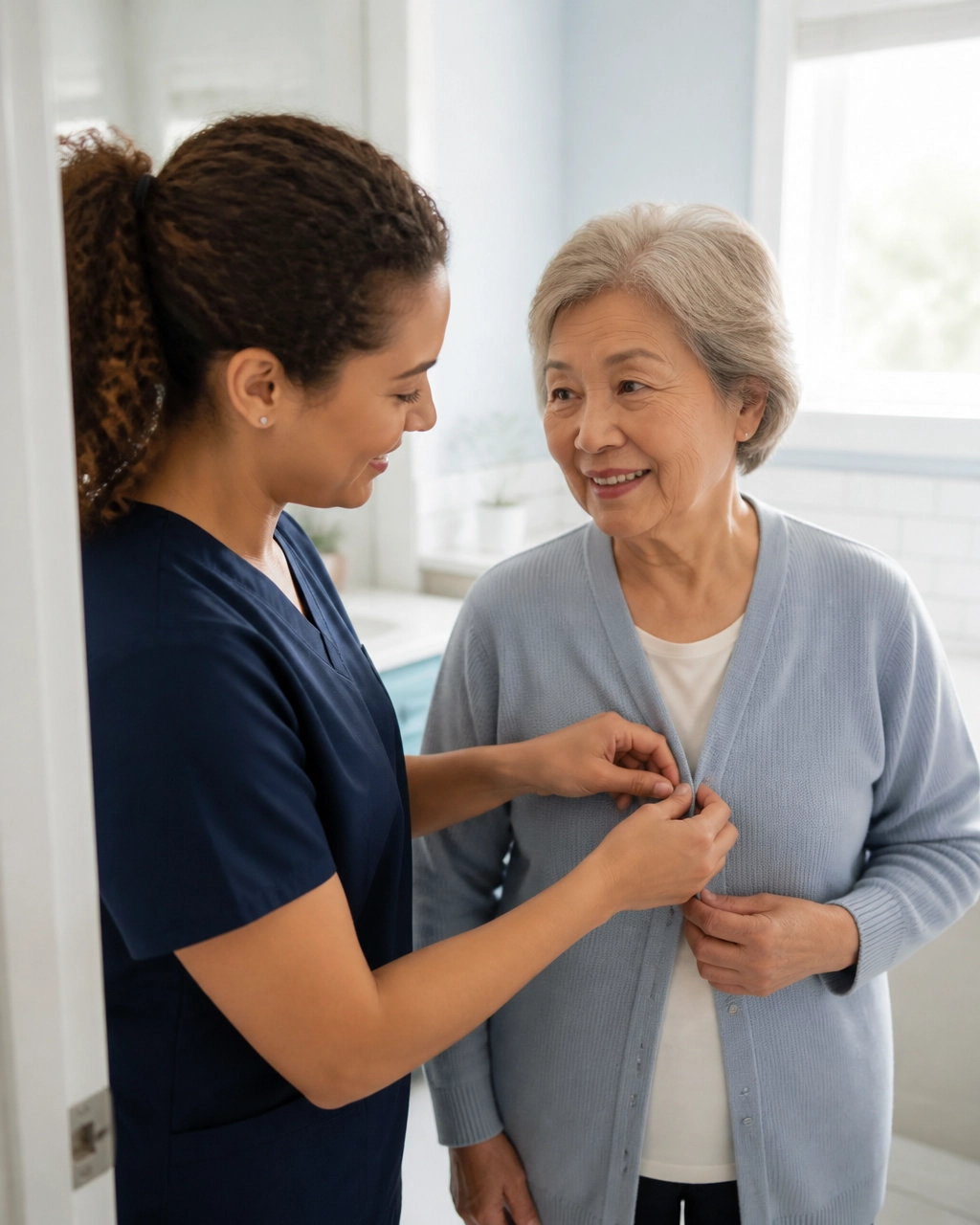
Has trouble choosing clothes or managing buttons, zippers, or shoes.
Needs assistance using the restroom or managing incontinence.
Has difficulty standing, walking, or moving between surfaces.
Has experienced falls or near-falls.
Needs help getting in or out of bed.
Cannot safely use a walker or other assistive device without support.
Has difficulty eating independently.
Is experiencing changes in hygiene or self-care despite reminders.
These needs do not mean your loved one has lost their independence. The right personal care support can help preserve independence by making daily routines safer and more manageable.
Why Many Families Need Both Services
Companion care and personal care are not competing choices. They often work together.
For example, a caregiver may provide hands-on assistance with bathing and dressing in the morning. Afterward, the same caregiver may prepare breakfast, complete light housekeeping, provide medication reminders, and spend time talking or playing a game with the client.
Another family may need personal care for a few hours each morning and companion care later in the day. Someone else may need mostly companionship now, with a plan to add personal care if mobility or self-care needs change.
A combination of services can support the whole person, including their:
Physical safety.
Emotional wellbeing.
Household routines.
Nutrition and meal planning.
Social connection.
Sense of dignity and control.
Ability to remain at home.

Questions to Ask When Choosing a Provider
Before beginning services, prepare a simple list of your loved one’s current needs. Consider personal care, household tasks, safety, transportation, meals, and companionship.
Then ask prospective providers:
Which services do you provide?
Confirm whether the agency offers companion care, personal care, or both.What tasks can caregivers perform?
Ask specifically about bathing, toileting, transfers, meal preparation, errands, housekeeping, and medication reminders.How are caregivers selected and trained?
Ask about screening, credentials, orientation, supervision, and ongoing support.How is the care plan created?
A good care plan should reflect your loved one’s abilities, preferences, schedule, and safety needs.How can services change over time?
Your loved one’s needs may increase gradually. Ask how the agency reviews and updates care.Does the provider serve your community?
Caring Hearts of Georgia serves clients in Newnan, Coweta County, Fayette County, and surrounding Georgia communities. Visit our service area page to learn more.
If your loved one may qualify for CCSP, SOURCE, ICWP, or Veteran Benefits, ask how services may coordinate with the applicable program. Eligibility, authorization, and covered tasks can vary, so families should confirm details with the appropriate case manager or program representative.
A Supportive Next Step for Your Family
Choosing care does not have to happen all at once. Begin by noticing which tasks have become difficult, unsafe, or stressful. Talk with your loved one about the kind of support that would feel comfortable and respectful.
If they mainly need conversation, supervision, household assistance, meals, or help with errands, companion care may be the right starting point. If they need hands-on assistance with bathing, dressing, toileting, grooming, eating, transfers, or mobility, personal care assistance may be more appropriate. In many situations, a combination provides the most complete support.
Caring Hearts of Georgia Health Services is here to help you understand your options. Our compassionate team provides companion and personal care services designed around your loved one’s needs, preferences, safety, and goals.
Begin a conversation with Caring Hearts of Georgia about dependable in-home support in Georgia.