
Falls at Home: 7 Simple Ways to Make Your Loved One's Home Safer

A fall can happen in only a moment, but its effects may last for weeks or months. Older adults may experience injuries, reduced confidence, or a fear of moving around the home. Families may also feel worried about leaving a loved one alone.
The good news is that many fall risks can be reduced with simple changes. A safer home does not need to feel clinical or restrictive. With thoughtful adjustments, your loved one can continue moving through familiar spaces with greater comfort and confidence.
The following seven steps offer a practical place to begin.
1. Improve Lighting Throughout the Home
Poor lighting can make it difficult to see changes in flooring, steps, furniture, or clutter. Shadows and glare may also affect depth perception.
Walk through the home during the day and evening. Pay close attention to hallways, stairs, entrances, bedrooms, and the path between the bedroom and bathroom.
Consider these improvements:
Add brighter, even lighting in darker rooms and hallways.
Place nightlights along nighttime walking routes.
Use motion-activated lights in hallways, bathrooms, and entrances.
Keep light switches easy to reach.
Make sure stairways have lighting at both the top and bottom.
Turn on lights before walking through unfamiliar or dim areas.
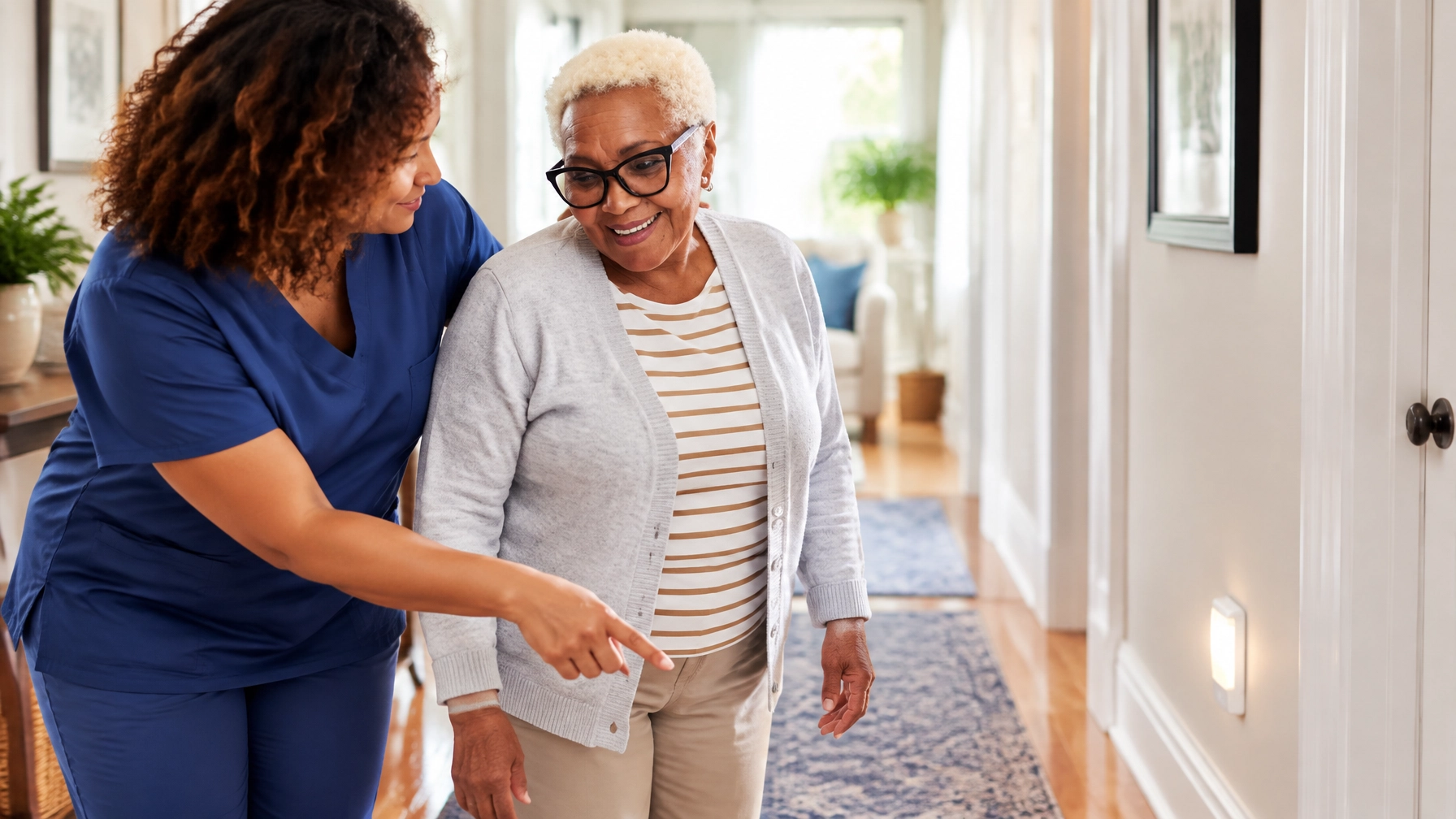
Small lighting improvements can make everyday movement easier without changing the way the home feels.
2. Make the Bathroom Safer
Bathrooms are one of the most important areas to review because water can make floors slippery and many daily tasks require standing, sitting, or stepping over a threshold.
Secure grab bars can provide steady support near the toilet and inside or beside the tub or shower. A properly installed grab bar is safer than relying on a towel bar or nearby sink.
You may also want to consider:
Non-slip treads or mats in the tub and shower.
A non-slip mat on the bathroom floor.
A shower chair if standing for long periods is difficult.
A raised toilet seat when lowering down or standing up is challenging.
A handheld showerhead for easier bathing.
Keeping soap, towels, and toiletries within easy reach.
Any equipment should be installed correctly and suited to your loved one’s needs. If you are unsure what would help, ask a medical professional, occupational therapist, or qualified home care provider for guidance.
3. Clear Walkways, Rugs, and Cords
Clutter can turn an ordinary walking path into a fall hazard. Shoes, books, pet toys, baskets, and electrical cords should not be left in hallways or near frequently used chairs.
Look at the home from your loved one’s perspective. A pathway that seems clear to you may still be difficult to navigate if your loved one uses a cane, walker, or moves more slowly.
Take these steps:
Remove loose throw rugs whenever possible.
Secure necessary rugs with non-slip backing or rug grippers.
Keep cords against walls and away from walking paths.
Move small tables, plants, and decorations out of narrow walkways.
Keep stairs clear of clothing, packages, and other objects.
Leave enough room for assistive devices to move comfortably.
A clean, organized environment supports safety and makes it easier to provide personal care assistance in Georgia when help is needed.
4. Encourage Safe, Supportive Footwear
Footwear affects balance more than many families realize. Loose slippers, smooth socks, high heels, and shoes that do not fit correctly can increase the chance of slipping or losing balance.
Encourage your loved one to wear well-fitting shoes with:
A secure heel.
Low or no heel.
Non-slip soles.
Good support.
Enough room for the toes.
Avoid walking barefoot on smooth floors, especially when getting out of bed at night. If your loved one has foot pain, swelling, numbness, or difficulty finding comfortable shoes, discuss those concerns with a healthcare provider or podiatrist.
Comfortable footwear can help your loved one feel more stable while walking inside and outside the home.
5. Review Medications With a Healthcare Professional
Some prescription medicines, over-the-counter products, vitamins, and supplements may cause dizziness, drowsiness, weakness, or changes in blood pressure. These effects can increase fall risk, particularly when a medication has recently been started or changed.
Ask your loved one’s doctor or pharmacist to review all medications regularly. Bring an up-to-date medication list or the medication containers to the appointment.
Do not stop or change a medication without professional guidance. Instead, ask:
Could any medication affect balance or alertness?
Could the timing of a dose contribute to nighttime dizziness?
Are there possible interactions between medications?
Should blood pressure or other health measures be monitored?
A medication review is especially important after a fall, near-fall, hospital stay, or noticeable change in walking or alertness.
6. Support Strength and Balance
Strength and balance can change gradually. A person may begin holding onto furniture, avoiding stairs, or walking less because they feel uncertain. Over time, less movement may lead to additional weakness.
Ask a healthcare professional whether appropriate exercises, physical therapy, or a structured fall-prevention program would be helpful. Depending on your loved one’s health, activities may include:
Gentle leg-strengthening exercises.
Supported chair rises.
Walking with appropriate supervision.
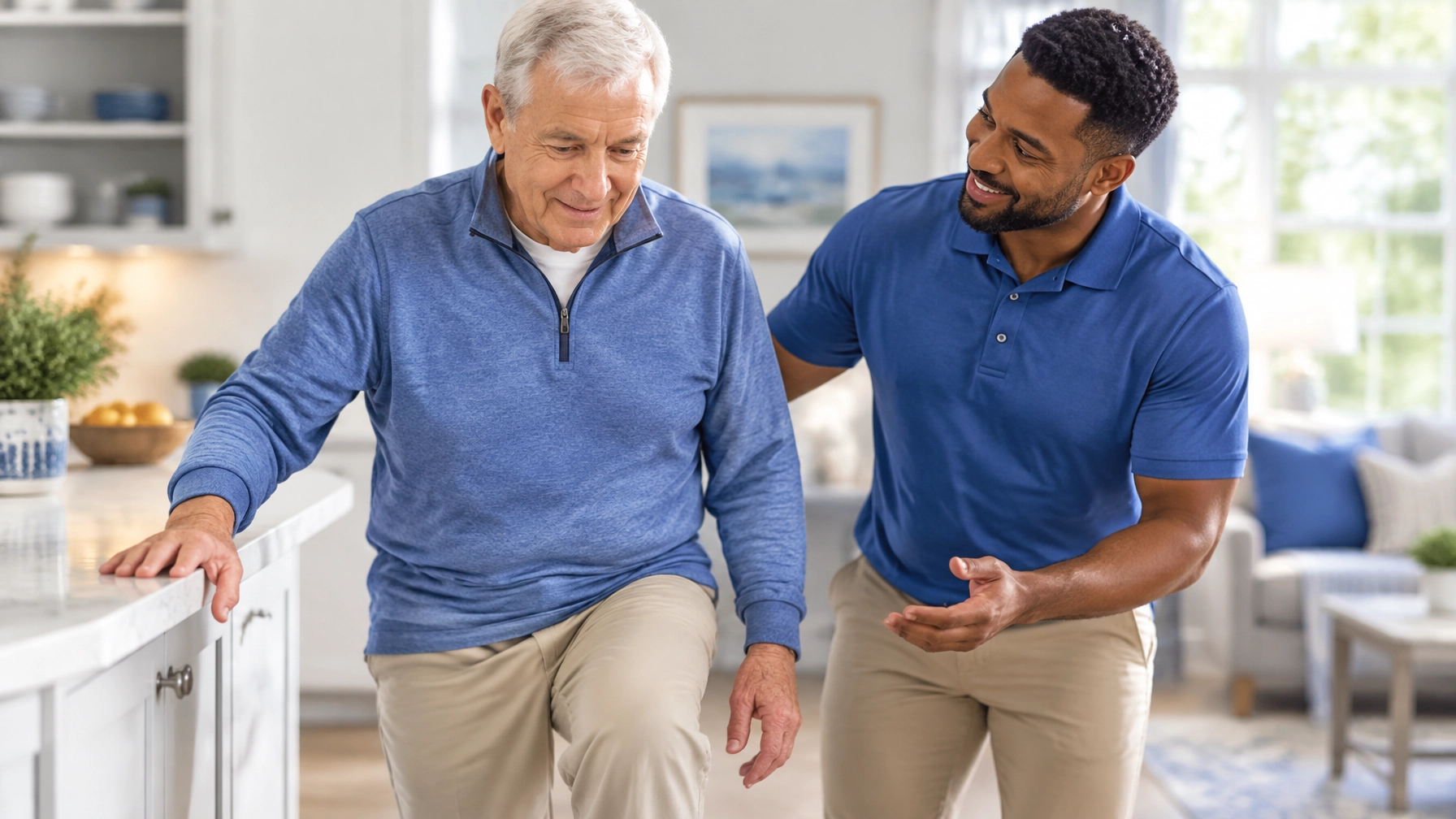
Balance exercises near a sturdy counter.
Tai chi or another approved movement program.
Safety comes first. Exercises should match your loved one’s ability and health condition. A caregiver can provide encouragement, help prepare a safe area, and support an established plan, but a clinician should guide exercise when there are significant mobility or balance concerns.
7. Know When to Ask for Professional Help
A fall or near-fall is a reason to pause and look more closely at your loved one’s needs. Even when there is no visible injury, a fall may signal changes in strength, balance, vision, medication effects, or overall health.
Speak with a healthcare professional if your loved one:
Has fallen or nearly fallen.
Holds onto walls or furniture while walking.
Feels dizzy, weak, or unsteady.
Has become afraid to walk or bathe alone.
Has difficulty getting in or out of bed or a chair.
Has experienced a recent medication or health change.
Is having trouble managing personal care or household tasks.
Has stopped participating in activities because of mobility concerns.
Your family may also benefit from professional in-home support. A qualified caregiver can help with mobility assistance, transfers, bathing, dressing, light housekeeping, meal preparation, errands, and companionship.
Caring Hearts of Georgia provides personal care services designed around individual needs. Support may include assistance with ambulation and transfers, fall prevention, personal hygiene, light housekeeping, and other daily activities.
Warning Signs That It May Be Time for In-Home Support
Families often wait until a serious fall occurs before asking for help. You do not have to wait for an emergency.
It may be time to explore support if you notice that your loved one:
Leaves meals unfinished or has difficulty preparing food.
Has trouble keeping the home clean and free of hazards.
Misses appointments or forgets important errands.
Needs help bathing, dressing, grooming, or using the restroom.
Becomes isolated or spends more time sitting alone.
Is not using a walker, cane, or other device safely.
Requires another person nearby for confidence during daily tasks.
The right level of care can change over time. Some families begin with a few hours of companionship or household assistance each week. Others need more consistent support with personal care and mobility.
If you are comparing in home care services in Georgia, look for an organization that listens carefully, communicates clearly, and creates a plan based on your loved one’s routines and preferences.
A Safer Home Supports Independence
Fall prevention is not about taking away independence. It is about making everyday activities safer so your loved one can continue living with dignity and confidence.
Start with one room. Improve the lighting, clear the path, secure the bathroom, and talk openly about any recent changes. Then involve your loved one in the next steps. Their comfort, preferences, and goals should remain central to the plan.
The CDC fall prevention resources and the National Institute on Aging fall-prevention guidance offer additional information for families.
Begin a Supportive Conversation With Caring Hearts
If you are searching for elderly care assistance in Georgia, exploring home care in Newnan, GA, or comparing home health care agencies in Georgia, Caring Hearts of Georgia is here to help you understand your options.
Our team provides personalized support for older adults, people with disabilities, veterans, and families who want dependable care at home. We accept eligible recipients of CCSP, SOURCE, ICWP, and Veteran Benefits programs.
You can learn more about our full range of services, review our service area, or contact Caring Hearts of Georgia to begin a conversation. There is no pressure to make an immediate decision. A conversation can simply help you identify the safest and most appropriate next step for your family.